
Fri, Nov 13, 2026
[Archive]
Volume 34, Issue 4 (July & August 2026)
J Adv Med Biomed Res 2026, 34(4): 374-379 |
Back to browse issues page


Ethics code: IR.MAZUMS.REC.1402.17969.


Download citation:
BibTeX | RIS | EndNote | Medlars | ProCite | Reference Manager | RefWorks
Send citation to:


BibTeX | RIS | EndNote | Medlars | ProCite | Reference Manager | RefWorks
Send citation to:
Yari F, Sadeghi ghadi Z, Mahbodi H, Enderami S E, Zargari K, Zargari M. Evaluating the Effects of Combined Colchicine and Melatonin Treatment on BAX/BCL2 Expression and Cell Survival in MCF-7 Cell Line. J Adv Med Biomed Res 2026; 34 (4) :374-379
URL: http://journal.zums.ac.ir/article-1-7833-en.html
URL: http://journal.zums.ac.ir/article-1-7833-en.html
Fatemeh Yari1 
 , Zynab Sadeghi ghadi2
 , Hossien Mahbodi3 , Seyed Ehsan Enderami2 , Kimia Zargari1 , Mehryar Zargari *4
, Zynab Sadeghi ghadi2 , Hossien Mahbodi3 , Seyed Ehsan Enderami2 , Kimia Zargari1 , Mehryar Zargari *4
1- Department of clinical biochemistry and genetic, Mazandaran University of Medical Sciences, Sari, Iran.
2- Department of biotechnology, faculty of advanced technology in medicine, Mazandaran University of medical sciences, sari, Iran
3- Depatment of of Biotechnology, Alborz University of Medical Sciences, Karaj, Iran.
4- Professor of Biochemistry, Department of clinical biochemistry and genetic, Molecular and cell biology research center, Faculty of Medicine Mazandaran University of Medical Sciences, Sari, Iran. ,mzargari@mazums.ac.ir
2- Department of biotechnology, faculty of advanced technology in medicine, Mazandaran University of medical sciences, sari, Iran
3- Depatment of of Biotechnology, Alborz University of Medical Sciences, Karaj, Iran.
4- Professor of Biochemistry, Department of clinical biochemistry and genetic, Molecular and cell biology research center, Faculty of Medicine Mazandaran University of Medical Sciences, Sari, Iran. ,
Full-Text [PDF 361 kb]
(115 Downloads)
| Abstract (HTML) (910 Views)
1. Introduction
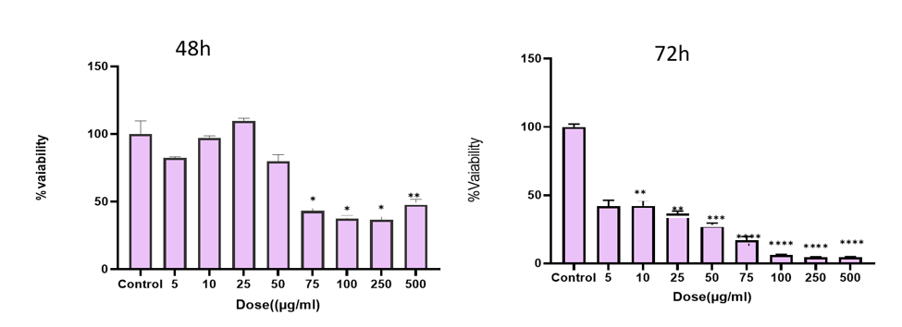
Figure 1. Effects of colchicine treatment on the viability of MCF-7 breast cancer cells after 48-72 h (MTT assay). Cells were exposed to different concentrations of colchicine. Data = mean±SD (n=3). *P < 0.05, **P < 0.01, and ***P < 0.001 = significant that compared with the control group. (Prepared by Authors, 2026).
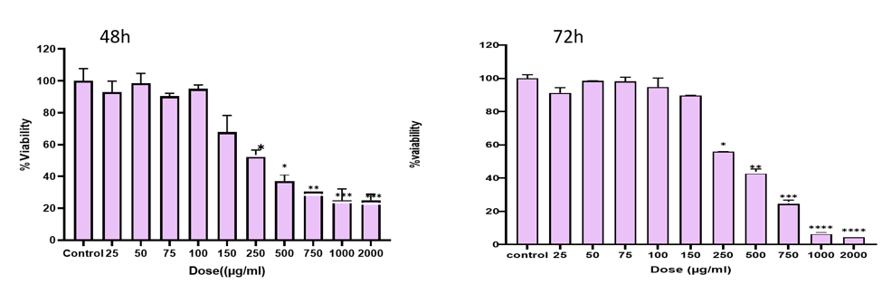
Figure 2. Effects of melatonin treatment on the viability of MCF-7 breast cancer cells after 48 and 72 h (MTT assay). Cells were exposed with different concentrations of melatonin. Data = mean±SD (n=3). *P < 0.05, **P < 0.01, and ***P < 0.001 = significant that compared with the control group. (Prepared by Authors, 2026).
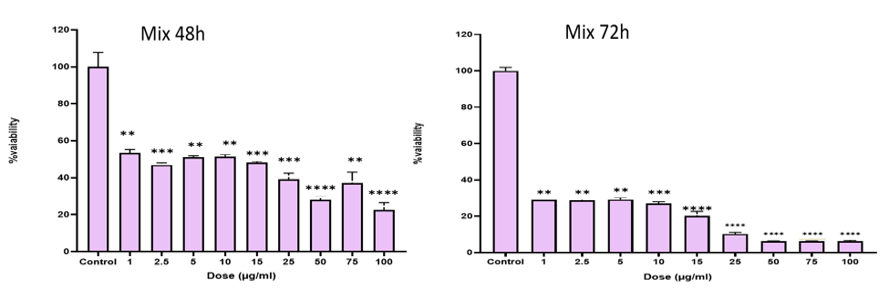
Figure 3. Effects of co-treatment with colchicine and melatonin on MCF-7 breast cancer cells viability after 48 and 72 h as determined by the MTT assay. Co-treatment significantly lowered viability of cell compared with alone-agent treatment. Data = mean±SD (n=3). *P < 0.05, **P < 0.01, and ***P < 0.001 = significant that compared with the control group. (Prepared by Authors, 2026).
3.4 Effect of treatments on BAX gene expression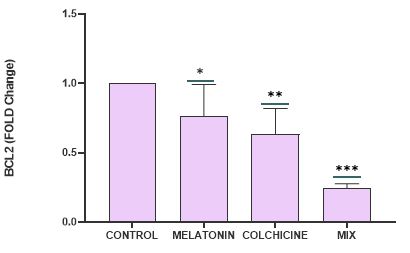
Figure 5. Comparative assessment of BCL2 gene expression in MCF-7 breast cancer cells exposed to colchicine, melatonin, or their combined treatment. Transcript levels were measured using Real-time PCR, with B2M serving as the normalization reference. Results are shown as mean ± SD. (*P < 0.05) indicate. (Prepared by Authors, 2026).
4. Discussion
This study evaluated colchicine and melatonin, alone and combined, on MCF-7 viability and apoptosis. Both agents reduced viability, but co-administration yielded stronger effects. Colchicine’s cytotoxicity stems from microtubule disruption and cell cycle arrest, ultimately leading to apoptosis (16, 17). Melatonin, by contrast, has been reported to regulate apoptosis through multiple pathways, including modulation of oxidative stress and gene expression (18, 19).
The enhanced effect observed in the combination treatment may be explained by the complementary mechanisms of these two agents. This synergistic interaction may increase apoptotic signaling more effectively than single-agent treatment. Consistent with earlier reports, melatonin appears to potentiate the responsiveness of malignant cells to chemotherapeutic agents by influencing mitochondrial signaling cascades and key regulators of programmed cell death. Therefore, the stronger reduction in cell viability observed in the combination group may result from simultaneous targeting of multiple cellular pathways involved in cancer cell survival (10,11,20).
While colchicine interferes with cell division, melatonin may enhance apoptotic signaling, resulting in increased cancer cell death. Similar synergistic effects have been reported in studies combining melatonin with other therapeutic agents, suggesting its role as a potential adjuvant in cancer treatment (13-15,21,22). At the molecular level, the observed upregulation of BAX alongside the downregulation of BCL2 points to the engagement of apoptotic pathways. The relative ratio of these two genes serves as a critical determinant of cellular survival or death (14). In the combination therapy group, the simultaneous rise in BAX and fall in BCL2 levels provide evidence for the involvement of the mitochondria-mediated (intrinsic) death pathway. These observations align with earlier works suggesting that melatonin may enhance apoptosis triggered by anticancer agents by regulating the BAX/BCL2 equilibrium (7,8,10).
Some variability in gene expression, particularly in response to melatonin alone, may reflect differences in concentration and exposure time, as reported in previous studies (15). Differences in experimental conditions, treatment duration, and drug concentration may contribute to these variations among studies (15).
Some limitation should be acknowledged in this work, such as relying on only one type of breast cancer cell line and non-implementing complementary techniques like flow cytometry. Further investigations are warranted to explore the molecular details more deeply and to confirm the observed effects in physiologically relevant settings.
Nevertheless, our observations suggest that the concurrent use of colchicine and melatonin may represent a viable approach to enhance apoptosis in breast cancer cells, which aligns with growing evidence in favor of synergistic treatment protocols (10,11,20-22).
5. Conclusion
Our findings showed that both colchicine and melatonin—especially when used together—decreased the MCF-7 cell viability and altered the transcriptional levels of genes associated with programmed cell death. The elevated BAX transcript levels, coupled with reduced BCL2 expression suggest activation of apoptotic signaling cascades. Based on these observations, the concurrent use of colchicine and melatonin may offer a novel approach to boost apoptosis in breast cancer cells. Nevertheless, additional in vivo investigations and clinical trials are necessary to substantiate these results and assess the translational feasibility of this combination.
6. Declarations
6.1 Acknowledgments
This work was part of a student thesis and was supported by the Molecular and Cell Biology Research Center, Mazandaran University of Medical Sciences (IR.MAZUMS.REC.1402.17969).
6.2 Ethical Considerations
IR.MAZUMS.REC.1402.17969.
6.3 Authors' Contributions
FY, KZ – lab work; ZSG – toxicology consultant; ZSG, HM – study design; SEE – molecular consultant; MZ – project supervision, writing, editing.
6.4 Conflict of Interest
No conflicts of interest.
6.5 Fund or Financial Support
The present study received financial support from the Molecular and Cell Biology Research Center, which operates under the Faculty of Medicine at Mazandaran University of Medical Sciences in Sari, Iran (ethical approval code: IR.MAZUMS.REC.1402.17969)
6.6 Using Artificial Intelligence Tools (AI Tools)
The authors were not utilized AI Tools.
Full-Text: (47 Views)
1. Introduction
Breast cancer ranks among the most prevalent female malignancies globally, presenting ongoing therapeutic challenges due to resistance and side effects of standard chemo/radiotherapy (1,2). Therefore, developing more effective treatments are urgently needed and of great importance. Drug combinations can boost efficacy while reducing toxicity and resistance. Researchers are actively investigating natural products and repurposed drugs with distinct mechanisms. Colchicine, a microtubule-destabilizing alkaloid, triggers mitotic arrest and apoptosis (3–6). Melatonin, a pineal hormone, exhibits antioxidant, anti-inflammatory, and oncostatic actions (7,8). It can regulate apoptosis through modulation of genes such as BAX and BCL2 and has been proposed as an adjuvant in cancer therapy (9).
The rationale for combining colchicine and melatonin is based on their complementary mechanisms of action. Colchicine interferes with cell division, while melatonin modulates cellular signaling pathways and apoptosis-related gene expression. Prior studies have shown that melatonin can augments the action of various anticancer agents in combination therapies and may improve therapeutic outcomes while reducing toxicity (10–12).
However, despite the promising individual effects of colchicine and melatonin, few studies have investigated their combined effects on apoptosis-related gene expression in MCF-7 cells. In particular, the synergistic effects of this combination on BAX and BCL2 expression in MCF-7 cells remain unclear. Therefore, this study investigates the effects of Combined Colchicine and Melatonin Treatment on cell viability and apoptosis-related gene expression in the MCF-7 cells.
2. Materials and Methods
2.1 Treatment Regimens with Colchicine, Melatonin, and Their Combination in MCF-7 cells
MCF-7 cells (IBRC, Tehran) were grown supplemented with 10% FBS and 1% penicillin/streptomycin (Dena Zist Asia, Mashhad, Iran) in RPMI-1640 at 37°C with 5% CO₂. At 70–80% confluence, treatments commenced. Colchicine and Melatonin (Mofid Pharma, Iran) were dissolved in 0.2% DMSO (Sigma-Aldrich, USA) to appropriate concentrations for each experiment. Control wells received 0.2% DMSO only. The study received ethics approval (IR.MAZUMS.REC.1402.17969). Experimental Groups: Group 1: Untreated control, Group 2: Melatonin alone, Group 3: Colchicine alone, Group 4: Colchicine + Melatonin
2.2 Cell Viability Assessment
Cell viability was assessed using the MTT assay (13). Cells (1×10⁴/well) in 96-well plates were treated by Colchicine doses: (0, 5, 10, 25, 50, 75, 100, 250, and 500 µg/mL); melatonin doses: (0, 25, 50, 75, 100, 150, 250, 500, 750, 1000, and 2000 µg/mL) for 24–72 hours. For the combination, we used fixed melatonin (150 µg/mL) with escalating colchicine (0, 2.5, 5, 10, 15, 25, 50, 75, and 100 µg/mL). The concentration ranges of colchicine and melatonin were selected due to rudimentary dose–response Investigation and previously published studies that showed their cytotoxic and apoptotic results in breast cancer cell lines, particularly MCF-7 cells (3,5,13-16). The final concentrations used for gene expression analysis were selected according to the obtained IC50 values and cell viability results from the present study. Then, 50 µL MTT (Sigma-Aldrich) was added for 4 hours at 37°C; formazan crystals were dissolved in DMSO and absorbance was read at 540 nm. Viability (%) = (treated OD / control OD) ×100.
2.3 Gene expression of BAX and BCL2 gene and Real-Time PCR
Cells were treated for 48 hours with either colchicine (75 µg/mL), melatonin (250 µg/mL), or their combination (colchicine 25 µg/mL + melatonin 150 µg/mL). Total RNA was then isolated using TRIzol (GeneAll, Korea). Concentration and purity were assessed via a NanoDrop spectrophotometer (Wilmington, DE, USA) based on optical density and ratio of A260/A280. Then cDNA was synthesized (GeneAll kits). SYBR Green master mix (Yekta Tajhiz, Iran) and a MIC Real-Time PCR system (Australia) in RT-PCR analysis were used as previously explained (14). Cycling: initial denaturation at 95°C for 10 min; 40 cycles of 95°C for 15 s: denaturation, 60°C for 30 s: annealing, 72°C for 30 s: extension. Relative expression was calculated via the ΔΔCT method based on the Pfaffl technique, and normalized CT values were normalized to β2M expression (Table 1).
Table 1. Primer sequences used for amplification are presented in Table 1.
| Gene | Forward | Reverse | Product size | GC% | Tm |
| B2M | GACCACTTACGTTCATTGACTCC | CAGGGTTTCATCATACAGCCAT | 150 | 50 | 60 |
| BAX | TCAGGATGCGTCCACCAAGAAG | TGTGTCCACGGCGGCAATCATC | 150 | 60 | 62 |
| BCL2 | ATCGCCCTGTGGATGACTGAGT | GCCAGGAGAAATCAAACAGAGGC | 150 | 58 | 61 |
2.4 Statistical Evaluation
One-way ANOVA followed by Tukey’s test (GraphPad Prism 8.0) using GraphPad Prism software version 8.0 was performed. Data = mean±SD (n=3). P<0.05 = significant.
3. Result
3.1 Effect of colchicine on MCF-7 cell viability
Colchicine, significantly reduced MCF-7 viability in a dose- and time-dependent manner. IC50 was ~150 µg/mL at 48 h, dropping to 5 µg/mL by 72 h, indicating stronger cytotoxicity with longer exposure (P<0.05; Figure. 1). Higher concentrations of colchicine showed in a significant decrease in cell viability compared to the control group (P < 0.05).
These findings indicate that colchicine has a potent antiproliferative effect on MCF-7 breast cancer cells. Figure 1 shows the effects of colchicine treatment on cell viability at 48 and 72 hours.
3.2 Effect of melatonin on MCF-7 cell viability
Melatonin also decreased viability in a concentration-dependent manner but less potently than colchicine. IC50 values were ~371 µg/mL (48 h) and 367 µg/mL (72 h) (P<0.05; Figure. 2). A gradual decrease in cell viability was shown at higher melatonin concentrations compared with the control (P < 0.05). Figure 2 presents the effects of melatonin treatment on MCF-7 cell viability at 48 and 72 h.
Figure 1. Effects of colchicine treatment on the viability of MCF-7 breast cancer cells after 48-72 h (MTT assay). Cells were exposed to different concentrations of colchicine. Data = mean±SD (n=3). *P < 0.05, **P < 0.01, and ***P < 0.001 = significant that compared with the control group. (Prepared by Authors, 2026).
Figure 2. Effects of melatonin treatment on the viability of MCF-7 breast cancer cells after 48 and 72 h (MTT assay). Cells were exposed with different concentrations of melatonin. Data = mean±SD (n=3). *P < 0.05, **P < 0.01, and ***P < 0.001 = significant that compared with the control group. (Prepared by Authors, 2026).
3.3 Effect of combined colchicine and melatonin exposure
Co-treatment with fixed melatonin (150 µg/mL) plus increasing colchicine yielded significantly lower viability than either drug alone (P<0.05). Combination IC50 values were ~3.57 µg/mL (48 h) and 1 µg/mL (72 h), indicating strong synergy of cytotoxic activity in the combined treatment group (Figure. 3). Cell viability significantly decreased at increasing colchicine concentrations in the presence of a fixed concentration of melatonin (150 µg/mL) (P < 0.05). These findings indicate a synergistic interaction between colchicine and melatonin in reducing breast cancer cell survival. Figure 3 illustrates the effects of combination treatment on MCF-7 cell viability at 48 and 72 h.
Co-treatment with fixed melatonin (150 µg/mL) plus increasing colchicine yielded significantly lower viability than either drug alone (P<0.05). Combination IC50 values were ~3.57 µg/mL (48 h) and 1 µg/mL (72 h), indicating strong synergy of cytotoxic activity in the combined treatment group (Figure. 3). Cell viability significantly decreased at increasing colchicine concentrations in the presence of a fixed concentration of melatonin (150 µg/mL) (P < 0.05). These findings indicate a synergistic interaction between colchicine and melatonin in reducing breast cancer cell survival. Figure 3 illustrates the effects of combination treatment on MCF-7 cell viability at 48 and 72 h.
Figure 3. Effects of co-treatment with colchicine and melatonin on MCF-7 breast cancer cells viability after 48 and 72 h as determined by the MTT assay. Co-treatment significantly lowered viability of cell compared with alone-agent treatment. Data = mean±SD (n=3). *P < 0.05, **P < 0.01, and ***P < 0.001 = significant that compared with the control group. (Prepared by Authors, 2026).
3.4 Effect of treatments on BAX gene expression
Colchicine, melatonin, and especially their combination significantly elevated BAX mRNA. The combination group showed the highest increase in pro-apoptotic BAX gene expression compare with single-agent treatment and control (P<0.05; Figure. 4). Increased BAX expression suggests activation of apoptotic pathways following treatment.
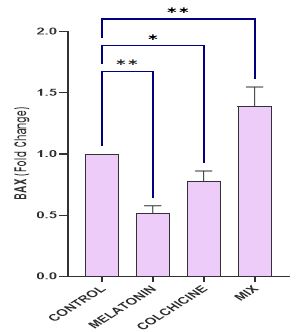
Figure 4. Relative expression level of the BAX gene in MCF-7 breast cancer cells following treatment with colchicine, melatonin, and combination therapy. Gene BAX mRNA was evaluated by Real-time PCR and normalized to B2M expression. Data are presented as mean ± SD. *P < 0.05 = significant compared with the control group. (Prepared by Authors, 2026).
Figure 4. Relative expression level of the BAX gene in MCF-7 breast cancer cells following treatment with colchicine, melatonin, and combination therapy. Gene BAX mRNA was evaluated by Real-time PCR and normalized to B2M expression. Data are presented as mean ± SD. *P < 0.05 = significant compared with the control group. (Prepared by Authors, 2026).
3.5 Effect of treatments on BCL2 gene expression
The expression of the anti-apoptotic BCL2 gene decreased following treatment with colchicine, melatonin, and particularly their combination. The combination treatment group showed the greatest reduction in BCL2 expression compared with the control group (P < 0.05), indicating repression of anti-apoptotic signaling pathways. Figure 5 illustrates the relative expression levels of BCL2 following treatment.
The expression of the anti-apoptotic BCL2 gene decreased following treatment with colchicine, melatonin, and particularly their combination. The combination treatment group showed the greatest reduction in BCL2 expression compared with the control group (P < 0.05), indicating repression of anti-apoptotic signaling pathways. Figure 5 illustrates the relative expression levels of BCL2 following treatment.
Figure 5. Comparative assessment of BCL2 gene expression in MCF-7 breast cancer cells exposed to colchicine, melatonin, or their combined treatment. Transcript levels were measured using Real-time PCR, with B2M serving as the normalization reference. Results are shown as mean ± SD. (*P < 0.05) indicate. (Prepared by Authors, 2026).
4. Discussion
This study evaluated colchicine and melatonin, alone and combined, on MCF-7 viability and apoptosis. Both agents reduced viability, but co-administration yielded stronger effects. Colchicine’s cytotoxicity stems from microtubule disruption and cell cycle arrest, ultimately leading to apoptosis (16, 17). Melatonin, by contrast, has been reported to regulate apoptosis through multiple pathways, including modulation of oxidative stress and gene expression (18, 19).
The enhanced effect observed in the combination treatment may be explained by the complementary mechanisms of these two agents. This synergistic interaction may increase apoptotic signaling more effectively than single-agent treatment. Consistent with earlier reports, melatonin appears to potentiate the responsiveness of malignant cells to chemotherapeutic agents by influencing mitochondrial signaling cascades and key regulators of programmed cell death. Therefore, the stronger reduction in cell viability observed in the combination group may result from simultaneous targeting of multiple cellular pathways involved in cancer cell survival (10,11,20).
While colchicine interferes with cell division, melatonin may enhance apoptotic signaling, resulting in increased cancer cell death. Similar synergistic effects have been reported in studies combining melatonin with other therapeutic agents, suggesting its role as a potential adjuvant in cancer treatment (13-15,21,22). At the molecular level, the observed upregulation of BAX alongside the downregulation of BCL2 points to the engagement of apoptotic pathways. The relative ratio of these two genes serves as a critical determinant of cellular survival or death (14). In the combination therapy group, the simultaneous rise in BAX and fall in BCL2 levels provide evidence for the involvement of the mitochondria-mediated (intrinsic) death pathway. These observations align with earlier works suggesting that melatonin may enhance apoptosis triggered by anticancer agents by regulating the BAX/BCL2 equilibrium (7,8,10).
Some variability in gene expression, particularly in response to melatonin alone, may reflect differences in concentration and exposure time, as reported in previous studies (15). Differences in experimental conditions, treatment duration, and drug concentration may contribute to these variations among studies (15).
Some limitation should be acknowledged in this work, such as relying on only one type of breast cancer cell line and non-implementing complementary techniques like flow cytometry. Further investigations are warranted to explore the molecular details more deeply and to confirm the observed effects in physiologically relevant settings.
Nevertheless, our observations suggest that the concurrent use of colchicine and melatonin may represent a viable approach to enhance apoptosis in breast cancer cells, which aligns with growing evidence in favor of synergistic treatment protocols (10,11,20-22).
5. Conclusion
Our findings showed that both colchicine and melatonin—especially when used together—decreased the MCF-7 cell viability and altered the transcriptional levels of genes associated with programmed cell death. The elevated BAX transcript levels, coupled with reduced BCL2 expression suggest activation of apoptotic signaling cascades. Based on these observations, the concurrent use of colchicine and melatonin may offer a novel approach to boost apoptosis in breast cancer cells. Nevertheless, additional in vivo investigations and clinical trials are necessary to substantiate these results and assess the translational feasibility of this combination.
6. Declarations
6.1 Acknowledgments
This work was part of a student thesis and was supported by the Molecular and Cell Biology Research Center, Mazandaran University of Medical Sciences (IR.MAZUMS.REC.1402.17969).
6.2 Ethical Considerations
IR.MAZUMS.REC.1402.17969.
6.3 Authors' Contributions
FY, KZ – lab work; ZSG – toxicology consultant; ZSG, HM – study design; SEE – molecular consultant; MZ – project supervision, writing, editing.
6.4 Conflict of Interest
No conflicts of interest.
6.5 Fund or Financial Support
The present study received financial support from the Molecular and Cell Biology Research Center, which operates under the Faculty of Medicine at Mazandaran University of Medical Sciences in Sari, Iran (ethical approval code: IR.MAZUMS.REC.1402.17969)
6.6 Using Artificial Intelligence Tools (AI Tools)
The authors were not utilized AI Tools.
Type of Study: Original Research Article |
Subject:
Clinical Medicine
Received: 2026/05/2 | Accepted: 2026/06/22 | Published: 2026/08/4
Received: 2026/05/2 | Accepted: 2026/06/22 | Published: 2026/08/4
References
1. Sung H, Ferlay J, Siegel RL, Laversanne M, Soerjomataram I, Jemal A, et al. Global cancer statistics 2020: GLOBOCAN estimates of incidence and mortality worldwide for 36 cancers in 185 countries. CA Cancer J Clin. 2021; 71(3):209-249. [DOI:10.3322/caac.21660] [PMID]
2. Barbosa AM, Martel F. Targeting glucose transporters for breast cancer therapy: the effect of natural and synthetic compounds. Cancers. 2020; 12(1):154. [DOI:10.3390/cancers12010154] [PMID] [PMCID]
3. Sun Y, Lin X, Chang H. Proliferation inhibition and apoptosis of breast cancer MCF-7 cells under the influence of colchicine. J BUON. 2016; 21(3):570-5.
4. Hawash M. Recent advances of tubulin inhibitors targeting the colchicine binding site for cancer therapy. Biomolecules. 2022; 12(12):1843. [DOI:10.3390/biom12121843] [PMID] [PMCID]
5. Foumani EA, Irani S, Shokoohinia Y, Mostafaie A. Colchicine of Colchicum autumnale, a traditional anti-inflammatory medicine, induces apoptosis by activation of apoptotic genes and proteins expression in human breast (MCF-7) and mouse breast (4T1) cell lines. Cell J. 2022;24(11):647-656.
6. Czarnecka-Czapczyńska M, Przygórzewska A, Dynarowicz K, Bartusik-Aebisher D, Aebisher D, Kawczyk-Krupka A. Glycosaminoglycans targeted by colchicine in MCF-7 cells. Pharmaceutics. 2025;17(11):1368. [DOI:10.3390/pharmaceutics17111368] [PMID]
7. Targhazeh N, Reiter RJ, Rahimi, Qujeq D, Yousefi T, Shahavi MH, et al. Oncostatic activities of melatonin: roles in cell cycle, apoptosis, and autophagy. Biochimie. 2022; 202:34-48. [DOI:10.1016/j.biochi.2022.06.008] [PMID]
8. Talib WH, Alsayed AR, Abuawad A, Daoud S, Mahmod AI. Melatonin in cancer treatment: current knowledge and future opportunities. Molecules. 2021; 26(9):2506. [DOI:10.3390/molecules26092506] [PMID] [PMCID]
9. Schettig R, Sears T, Klein M, Tan-Lim R, Matthias R, Aussems C, et al. Melatonin: a powerful integrative adjunctive agent for oncology. J Cancer Ther. 2020; 11(9):571-596. [DOI:10.4236/jct.2020.119049]
10. Trejo-Solís C, Rojas-Tomé IS, Palomares-Alonso F, Jung-Cook H. Melatonin combined with antineoplastic drugs or natural products for cancer treatment: an update. Curr Res Pharmacol Drug Discov. 2025;9:100239. [DOI:10.1016/j.crphar.2025.100239] [PMID] [PMCID]
11. Talib WH, Sabri SM, Hadi RW, Prémusz V, Beregi T. Melatonin and vitamins: a promising combination to augment conventional anticancer therapies. Nutrients. 2025; 17(19):3120. [DOI:10.3390/nu17193120] [PMID] [PMCID]
12. Oral S, Akpak YK, Turan G, Lafci D, Kinci MF, Usta CS. Efficacy of colchicine and melatonin in the treatment of rat endometriosis model: An animal study. J Reprod Immunol. 2024; 165:104294. [DOI:10.1016/j.jri.2024.104294] [PMID]
13. Shayan S, Osgoei LT, Jouni FJ. Effect of capecitabine and melatonin on HER2+ (SK-BR-3) and HER2- (MCF7) human breast cancer cell lines. Trop J Pharm Res. 2023; 22(7):1387-93. [DOI:10.4314/tjpr.v22i7.5]
14. Alamro AA, Al-Malky MM, Ansari MG, Osama EA, Alnaami AM, Hussain SD, et al. The effects of melatonin and vitamin D3 on the gene expression of BCl-2 and BAX in MCF-7 breast cancer cell line. J King Saud Univ Sci. 2021; 33(2):101287. [DOI:10.1016/j.jksus.2020.101287]
15. Önder GÖ, Sezer G, Özdamar S, Yay A. Melatonin has an inhibitory effect on MCF-7 and MDA-MB-231 human breast cancer cell lines by inducing autophagy and apoptosis. Fundam Clin Pharmacol. 2022; 36(6):1038-56. [DOI:10.1111/fcp.12813] [PMID]
16. Deng S, Krutilina RI, Hartman KL, Chen H, Parke DN, Wang R, et al. Colchicine-binding site agent CH-2-77 as a potent tubulin inhibitor suppressing triple-negative breast cancer. Mol Cancer Ther. 2022; 21(7):1103-14. [DOI:10.1158/1535-7163.MCT-21-0899] [PMID] [PMCID]
17. Kumar A, Singh B, Sharma PR, Bharate SB, Saxena AK, Mondhe DM, et al. A novel microtubule depolymerizing colchicine analogue triggers apoptosis and autophagy in HCT-116 colon cancer cells. Cell Biochem Funct. 2016; 34(2):69-81. [DOI:10.1002/cbf.3166] [PMID]
18. Kong X, Gao R, Wang Z, Wang X, Fang Y, Gao J, et al. Melatonin: a potential therapeutic option for breast cancer. Trends Endocrinol Metab. 2020; 31(11):859-71. [DOI:10.1016/j.tem.2020.08.001] [PMID]
19. Song D, Liu Y, Yao Y, Liu F, Tao W, Zhou X, et al. Melatonin improves bisphenol A-induced cell apoptosis, oxidative stress and autophagy impairment via inhibition of the p38 MAPK signaling pathway in FLK-BLV cells. Environ Toxicol. 2022; 37(7):1551-62. [DOI:10.1002/tox.23505] [PMID]
20. Wang X, Zhong X, Liu Z, Cheng L. Recent progress of chemodynamic therapy-induced combination cancer therapy. Nano Today. 2020; 35:100946. [DOI:10.1016/j.nantod.2020.100946]
21. Sanchez-Barcelo EJ, Mediavilla MD, Alonso-Gonzalez C, Reiter RJ. Melatonin uses in oncology: breast cancer prevention and reduction of side effects of chemotherapy and radiation. Expert Opin Investig Drugs. 2012; 21(6):819-31. [DOI:10.1517/13543784.2012.681045] [PMID]
22. Talib WH. A ketogenic diet combined with melatonin overcomes cisplatin and vincristine drug resistance in breast carcinoma syngraft. Nutrition. 2020; 72:110659. [DOI:10.1016/j.nut.2019.110659] [PMID]
Send email to the article author
| Rights and permissions | |
 |
This work is licensed under a Creative Commons Attribution-NonCommercial 4.0 International License. |
Copyright Policy
Journal of Advances in Medical and Biomedical Research by Zanjan University of Medical Sciences is licensed under CC BY-NC 4.0