
Fri, Nov 13, 2026
[Archive]
Volume 34, Issue 4 (July & August 2026)
J Adv Med Biomed Res 2026, 34(4): 338-346 |
Back to browse issues page


Download citation:
BibTeX | RIS | EndNote | Medlars | ProCite | Reference Manager | RefWorks
Send citation to:


BibTeX | RIS | EndNote | Medlars | ProCite | Reference Manager | RefWorks
Send citation to:
Tanhaei S E, Yazdimoghaddam H, Soltani Q, Fekri N, Ghasemi M R. The Effect of Nurse Voice-Based Auditory Orientation on Agitation and Recovery Time after General Anesthesia in Laparoscopic Cholecystectomy: A Randomized Clinical Trial. J Adv Med Biomed Res 2026; 34 (4) :338-346
URL: http://journal.zums.ac.ir/article-1-7856-en.html
URL: http://journal.zums.ac.ir/article-1-7856-en.html
Seyedeh Efat Tanhaei1 

 , Hamideh Yazdimoghaddam2 , Qasem Soltani3 , Nazanin Fekri4 , Mohammad Reza Ghasemi *5
1- Department of Nursing, School of Nursing and Midwifery, Sabzevar University of Medical Sciences, Sabzerar, Iran
2- Department of Operating Room, Non-communicable Disease Research Center, Faculty of Paramedics, Sabzevar University of Medical Sciences, Sabzerar, Iran
3- Department of Anesthesiology, School of Medicine, Lung Diseases Research Center, Imam Reza Hospital, Mashhad University of Medical Sciences, Mashhad, Iran
4- Department of Biostatistics, School of Health, Sabzevar University of Medical Sciences, Sabzevar, Iran
5- Department of Nursing, Nursing and Midwifery School, Iranian Research Center on Healthy Aging, Sabzevar University of Medical Sciences, Sabzevar, Iran ,ghasemimr901@gmail.com
2- Department of Operating Room, Non-communicable Disease Research Center, Faculty of Paramedics, Sabzevar University of Medical Sciences, Sabzerar, Iran
3- Department of Anesthesiology, School of Medicine, Lung Diseases Research Center, Imam Reza Hospital, Mashhad University of Medical Sciences, Mashhad, Iran
4- Department of Biostatistics, School of Health, Sabzevar University of Medical Sciences, Sabzevar, Iran
5- Department of Nursing, Nursing and Midwifery School, Iranian Research Center on Healthy Aging, Sabzevar University of Medical Sciences, Sabzevar, Iran ,
Full-Text [PDF 374 kb]
(126 Downloads)
| Abstract (HTML) (768 Views)
1. Introduction
Table 1. Distribution of demographic variables in the intervention and control groups.
Table 2. Comparison of mean clinical variables between the intervention and control groups.
Table 3. The Effect of Age and Body Mass Index on Agitation.
Figure 2. A Comparison of Mean Patient Agitation Scores in the Two Study Groups. (Prepared by Authors, 2026).
Full-Text: (49 Views)
1. Introduction
Every year, millions of patients worldwide undergo various surgical procedures (1). Irrespective of its extent, duration, and type, surgery is invariably an anxiety-provoking and stressful experience for patients (2, 3). Most of surgical procedures are performed under general anesthesia (4). Complications of general anesthesia include a protracted postoperative recovery period, agitation, and restlessness (5). Post-anesthesia agitation and restlessness are significant concerns for medical staff (6). Agitation is a clinical condition accompanied by restlessness, confusion, and aggressive behavior in the initial phase of recovery from general anesthesia. During periods of agitation, patients may experience disturbances in awareness and consciousness, disorientation, heightened sensory sensitivity, and increased motor activity. While this situation may impose self-limiting constraints, it can also cause physical harm to the patient, particularly in the surgical area (7). Agitation can also occur acutely, which is considered a behavioral disorder in the early postoperative period (8). This common complication after general anesthesia is characterized by various manifestations including crying, agitation, limb thrashing and movement, wandering, and can increase serious injuries such as extubation, falling from the bed, accidental removal of surgical dressings, and dislodgement of intravenous catheters and drains (9). Agitation in a patient can lead to serious consequences including respiratory depression, nausea and vomiting, increased blood pressure, increased heart rate, and increased myocardial oxygen consumption (10), Furthermore, agitation may also trigger stress responses, delay surgical wound healing, and suppress the immune system after surgery (8).
Although agitation manifests differently in various individuals, aimless limb movements and pounding, restlessness, and wandering typically appear in patients. Furthermore, patients often respond poorly to verbal commands (11). The actual incidence and risk factors of agitation are unknown. In adult non-cardiac surgeries, the incidence of agitation has been documented to be approximately 19% (12). A multitude of factors have been identified as potential etiological agents of agitation in patients, including metabolic disorders, nervousness, previous surgery, patient adaptability, pain, and the duration of anesthesia (13).
Agitation is a prevalent complication in 63.5% of patients after abdominal surgery, which is associated with increased postoperative complications and hospitalization costs (14). This clinical complication requires additional nursing care and supplementary sedatives or analgesics, which can also cause respiratory depression (9). Nurse-patient communication and providing information about the condition and treatment process are considered methods of reducing patient stress and anxiety (15).
Severe agitation can be dangerous and lead to patient-ventilator asynchrony, increased oxygen consumption, and inadvertent dislodgement of devices and catheters connected to the patient (16). These issues are related to the individual's recovery time after surgery, length of hospital stay, patient costs, and healthcare staff satisfaction (17). Research findings that recovery duration and emergence from anesthesia a significant role in clinical outcomes, treatment costs, and surgical results (18). A persistent concern for anesthesiologists from the past until now has been the delay in recovery from anesthesia and determining the patient's level of consciousness. A variety of factors influence the recovery process from anesthesia and the attainment of consciousness. These factors include patient-related factors, medications, anesthetics, and surgical interventions. Researchers have made significant efforts to find therapeutic solutions for patients recovering from anesthesia (19). Consequently, various programs have been developed and implemented worldwide to reduce patients ‘recovery time after surgery (17).
One of these methods is sensory stimulation. Sensory stimulation is a therapeutic method that enhances cognitive function by activating the reticular activating system (RAS); it also creates collateral relationships that help reorganize brain activity, leading to increased RAS activity and arousal. These stimulations can include visual, olfactory, tactile, gustatory, and auditory stimulations (19).
Research has shown that auditory stimulation is an easy, inexpensive, and noninvasive tool for reducing patient anxiety (20). Dehghani et al.'s study showed that auditory stimulation with familiar sounds improved patients ‘consciousness scores after rhinoplasty surgery. Auditory stimulation increases wakefulness in individuals by reorganizing brain activity and affecting the reticular activating system. It also reduces the recovery time from anesthesia in patients (19). Lee et al. showed that after minimally invasive abdominal surgery, the use of auditory reminders by the anesthesia team significantly reduced patient agitation (14). Hearing is crucial for experiencing peace and security. Furthermore, it is typically the last sense to fade in patients with diminished consciousness. Auditory stimulation is the easiest type of stimulation in patient care; which nurses can easily provide it through verbal communication during care activities, and it is applicable to a large number of patients.
A literature review found that several studies on auditory stimulation during recovery have been conducted, and in some cases, the anesthesia team provided this stimulation. However, in the operating room after the surgery ends and during the awakening phase, patient restlessness is higher, and the effect of familiar sounds on patient awareness is significant.
Given the potential benefits of familiar sensory stimuli in reducing patient agitation and improving recovery, as well as the adverse consequences of restlessness and agitation during the recovery period following general anesthesia, the present study was conducted to determine the effect of nurse voice-based auditory orientation on postoperative agitation and recovery time in patients undergoing laparoscopic cholecystectomy (LC).
2. Materials and Methods
2.1 Study Population and Setting
This randomized clinical trial (RCT) was conducted at Imam Reza and Ghaem hospitals, affiliated to Mashhad University of Medical Sciences, Mashhad, Iran from May 2024 through January 2025. For this purpose, we asked 54 consecutive patients eligible for LC to participate in the study.
2.2 Inclusion and Exclusion Criteria
Participants were eligible for this study if they met the following criteria:
The eligibility criteria included having informed consent to participate in the study, awareness of time and place, the age range of 18-70 years, body mass index (BMI˂30 kg/m2), patient’s first surgical experience and meeting the American Society of Anesthesiologists Physical Status (ASAPS) classification I-II were the inclusion criteria of the study. Moreover, pregnancy at the time of surgery, which required upper abdominal surgery procedures like adhesiolysis, a history of anesthesia or sedation within the past month, hearing impairment, cognitive disorders (e.g., Alzheimer's disease, dementia, or memory impairment), substance or psychotropic drug use disorder, history of addiction, a history of mental illness, and the use of antipsychotic medications were considered as the pre-operative exclusion criteria of the study. In addition, intraoperative exclusion criteria included conversion from laparoscopic to open surgery, prolonged operation time lasting more than 2 h, drain insertion, and iatrogenic perforation. Furthermore, we registered the study in the Iranian Registry of Clinical Trials (IRCT) (protocol number: IRCT20240529061947N1).
2.3 Study Design and Randomization
The required sample size for the present study was determined based on the findings of Lee et al. (19). Using G*Power software, with a statistical power of 0.95 and a significance level (α) of 0.05, and accounting for an anticipated 20% dropout rate, the required sample size was calculated as 27 participants per group.
Therefore, these individuals were randomly categorized into control and intervention groups with the permuted blocks (viz. 10 blocks: 5 blocks from Imam Reza Hospital and 5 blocks from Ghaem Hospital) in the form of random allocation (using the Random Allocation Software). Finally, 54 consecutive patients as candidates for CL were randomly allocated to one of the following two groups; 27 cases were assigned to the intervention group (Group I) who received awareness with auditory sensory stimulation was conducted using the pre-recorded voice of the patient's nurse from the surgical ward; and 27 patients were entered into Group II with no intervention, merely serving as the control group of the study.
2.4 Data Collection
Before data collection, the study objectives and procedures were explained to the patients, and written informed consent was obtained from those who voluntarily agreed to participate. The researchers then addressed any questions or concerns raised by the participants. Demographic and clinical data were collected through face-to-face interviews, review of medical records, and physical measurements. All baseline data were recorded within 24 hours before surgery. Patients were assessed on the evening before surgery, prior to the administration of anesthesia.
2.5 Anesthetic Methods
Once in the operating room, patients were placed under standard monitoring, including an electrocardiogram, pulse oximetry, blood pressure, and an end-tidal carbon dioxide measurement probe. The anesthetists followed a standardized protocol. General anesthesia was induced on all patients under the supervision of the anesthesiologist with intravenous fentanyl (2 µg/kg), propofol (2 mg/kg), and atracurium (0.5 mg/kg). The patient was then intubated with an appropriate endotracheal tube and placed on mechanical ventilation. Oxygen (O2) 50%, nitrogen dioxide (NO2) 50%, and 1 MAC (Minimum Alveolar Concentration) isoflurane were used for maintenance, and the ventilation frequency was adjusted to maintain end-tidal CO2 partial pressure from 30 to 35 mmHg. Anesthesia was maintained with isoflurane 0.5% and remifentanil infusion 0.05-0.2 µg/kg, and atracurium besylate 10 mg every 30 minutes as needed. To reverse the effects of muscle relaxants was used, neostigmine 0.04 mg/kg and atropine 0.02 mg/kg, along with ondansetron 4 mg for prophylaxis to prevent nausea and vomiting.
All laparoscopic procedures were performed by the same surgeon at Imam Reza and Ghaem Hospitals, Iran. In addition, laparoscopic port (or trocar) placement was determined based on the patients’ needs and condition, and laparoscopic access was provided using a standard three-port method. Furthermore, laparoscopy was accomplished with CO2 as the distending medium. We also monitored intra- abdominal gas pressure and the total volume of the gas delivered during the course of laparoscopy. Consequently, CO2 was insufflated via an umbilical port with the pressure of 8-10 mmHg (note: CO2 pressure was adjusted to 12 mmHg during laparoscopy). Finally, two 5-mm trocars were inserted into the left iliac fossa and the suprapubic region. Before removing the trocars, the carbon dioxide pneumoperitoneum was systematically evacuated. It is noteworthy that the surgeon, the anesthetists, and the data collectors were blinded to the study.
After the surgeon had finished the operation and the administration of reversal medications began, the intervention started with the anesthesiologist's permission. At this stage, after the operation was finished and before the patient was transferred to the recovery room, patients in the intervention group received auditory sensory stimulation through headphones via a nurse's voice to promote awareness. In this study, patients in both the intervention and the control groups used BOROFONE wireless headphones (Model BO11), manufactured in China.
2.6 The auditory sensory stimulation with the nurse's voice
To prepare familiar voices, the researcher collaborated with the nurse responsible for the patient's care, who had performed all pre-operative care for the patient in the surgical ward, so their voices could be recorded using the desired text. In order to standardize the voices and to eliminate potential errors caused by the influence of male or female voices, only female nurses were considered in the study. For all patients in the intervention group, the following text was played over the nurse's voice:
'Sir/ Madam. ... I am your nurse. You are waking up from anesthesia. Your surgery has been successfully completed. You are fine, don't worry. You are in the operating room at ... Hospital. Please open your eyes."
This sound was played repeatedly through headphones at a normal hearing intensity of 50 to 60 decibels; from the time the anesthetic was discontinued until the patient had sufficient respiratory function and cooperation to be extubated and open their eyes. Patients in the control group received routine care administered as usual in the operating room. To minimize bias, and because of extraneous sounds in the operating room—such as device alarms, equipment movement, staff conversations, and door openings/closings—could influence patient agitation, we controlled for them by using headphones in the control group. This eliminated this confounding variable and ensured consistent conditions across groups. However, the patients in the control group only heard the following sentence:
'Sir/Madam …, open your eyes. The surgical procedure has been completed.'
After airway secretions were suctioned, patients in both groups who demonstrated adequate respiratory function and cooperation, and were deemed fit for extubation by the anesthesiologist, were transferred to the recovery room for monitoring and oxygen therapy.
2.7 Outcomes
The assessment of patient agitation used the Richmond Agitation-Sedation Scale (RASS), which consists of 10 levels: four levels indicating agitation, one level representing a calm and alert state, and five levels indicating increasing levels of sedation. The Richmond Scale was developed and validated by Sessler et al. (21). In Iran, it was translated and validated by Tadrissi et al. in 2009, with an inter-rater reliability reported as an intraclass correlation coefficient (ICC) of 0.95 (22). In this study, agitation scores were recorded in both groups at the following time points: before auditory stimulation, at the time of extubation, five 5 minutes post-extubation, upon entry into the recovery room, and then every 10 minutes during the first 30 minutes of recovery. The Aldrete Score checklist was used to evaluate the patient's clinical status in the post-anesthesia care unit. The evaluation encompassed five parameters: level of consciousness, respiration, motor function, hemodynamic stability, and arterial oxygen saturation (23). In the present study, we recorded the recovery time (in minutes) for both groups using the validated Aldrete Score checklist, a widely accepted tool for evaluating the recovery process in medical settings.
2.8 Statistical Analysis
Mean ± standard deviation (SD) or median (interquartile range) for continuous variables and frequencies (%) for categorical variables were used to show baseline characteristics of the participants. To compare demographic characteristics between the intervention and control groups, we used the Chi-square test or Fisher’s exact test for qualitative variables, and the independent t-test was used for quantitative variables. However, because the assumptions of t-test were not met when comparing recovery time between the two groups, we used the non-parametric equivalent, the Mann–Whitney U test. Given that agitation scores were measured and recorded at seven different time points for each patient in both groups, the Generalized Estimating Equations (GEE) method was used for comparison. For each statistical analysis, a p-value < 0.05 was considered significant. The data analysis was performed using the SPSS (version 22) software (SPSS Inc. Chicago; IL: USA).
3. Result
The mean age of patients in the intervention group was 46.41 ± 14.28 years, and in the control group, it was 43.89 ± 11.69 years (P = 0.48). The mean body mass index (BMI) was 26.93 ± 3.28 in the intervention group and 26.93 ± 3.28 in the control group (P = 0.82). The independent t-test revealed that there were no statistically significant differences between the two groups in terms of age or BMI (P > 0.05). The Chi-square test or Fisher’s exact test showed no statistically significant differences between the two groups with regard to gender, education level, history of underlying diseases, marital status, or history of smoking (P > 0.05) (Table 1).
Statistical analysis showed no significant differences between the two groups with regard to the duration of mechanical ventilation, the duration of surgery, or time to extubation (P > 0.05).
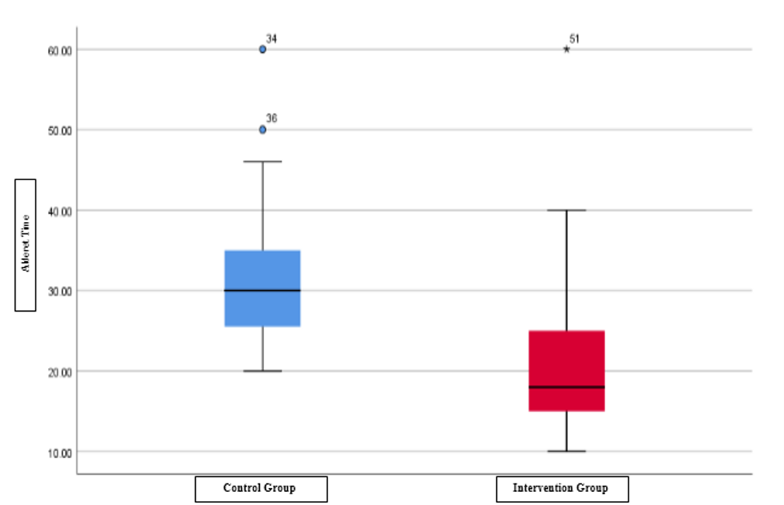
However, recovery time differed significantly between the groups (P < 0.01). The intervention group demonstrated a considerably reduced recovery time. (Table 2). The results showed that the control group had higher mean scores in the recovery time variable, as demonstrated in the box plot (Figure 1).
Table 1. Distribution of demographic variables in the intervention and control groups.
| Variables | Group | P- value | ||
| Intervention N (%) | Control N (%) | |||
| Gender | Male | 5 (18.5) | 7 (25.9) | 0.51 |
| Female | 22 (81.5) | 20 (74.1) | ||
| Marital status | Married | 26 (96.3) | 25 (92.6) | 1.00 |
| Single | 1 (3.7) | 2 (7.4) | ||
| Education level | High school | 10 (37) | 13 (48.1) | 0.52 |
| diploma | 12 (44.4) | 8 (29.6) | ||
| Higher than diploma | 5 (18.6) | 6 (22.3) | ||
| Smoking | Yes | 4 (14.8) | 5 (18.5) | 0.71 |
| No | 23 (85.2) | 22 (81.5) | ||
| Past Medical History | Yes | 6 (22.2) | 8 (29.6) | 0.53 |
| No | 21 (77.8) | 19 (70.4) | ||
Table 2. Comparison of mean clinical variables between the intervention and control groups.
| Group | Intervention Mean ± SD |
Control Mean ± SD |
P- value |
| Duration of Surgery | 8.9±38.33 | 10.15±38.85 | 0.92 |
| Duration of Mechanical Ventilation | 10.04±53.74 | 12.33±53.51 | 0.94 |
| Recovery Time (Aldrete Score) | 11.15±21.29 | 9.16±32.29 | *<0.01 |
| Time to Extubation | 2.46±10.37 | 2.08±11.59 | <0.05 |
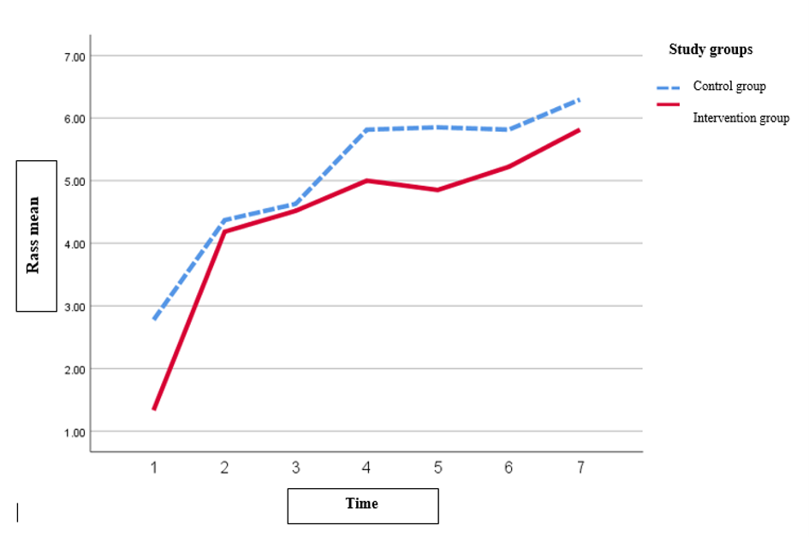
The Generalized Estimating Equations (GEE) analysis of agitation score measurements across seven time points showed a statistically significant difference between the intervention and control groups (P < 0.05), with the intervention group having lower agitation scores. The GEE analysis indicated that the group variable significantly affected agitation. Specifically, the intervention group demonstrated lower agitation scores. The negative regression coefficient for the group variable indicates that being in the intervention group, compared to the control group, was associated with a statistically significant reduction in agitation scores (Table 3). The line plot showed that the control group had persistently higher mean agitation scores at all time points during the study (Figure 2).
Table 3. The Effect of Age and Body Mass Index on Agitation.
| Agitation | Beta | SE | P-value |
| y-intercept | 1.475 | 0.178 | <0.001 |
| Group | -0.217 | 0.041 | <0.001 |
| Age | 0.004 | 0.002 | 0.011 |
| BMI | 0.002 | 0.005 | 0.665 |
Figure 2. A Comparison of Mean Patient Agitation Scores in the Two Study Groups. (Prepared by Authors, 2026).
4. Discussion
Surgical procedures and general anesthesia frequently result in physiological disturbances that may lead to postoperative complications during the recovery phase. Among these, postoperative agitation and delayed recovery are of particular concern. Given the clinical significance of identifying and minimizing such complications, the present study aimed to investigate the effect of nurse voice-based auditory orientation on agitation and recovery time after general anesthesia in LC.
The findings demonstrated that patients in the intervention group, who received auditory orientation via the nurse’s voice, exhibited significantly lower agitation scores than the control group. Consistent with these results, Lee et al. reported in their study, “The Effect of Repeated Verbal Reminders on Agitation Following General Anesthesia for Minimally Invasive Abdominal Surgery,” that the incidence of severe agitation was 0% in the intervention group versus 17.5% in the control group (14).
These findings support the hypothesis that verbal stimulation is a simple and practical strategy for mitigating post-anesthesia agitation. Similarly, Mahmoodi et al., in their study titled "The Effect of Structured Auditory Stimulation by Nurses on Coma Duration in Patients with Traumatic Brain Injury," found that patients in the intervention group regained consciousness earlier than those in the control group. This supports the notion that structured auditory stimulation can facilitate the return of consciousness in comatose patients (24).
This result aligns with the present study and underscores the potential of nurse-initiated verbal communication during routine care to serve as effective auditory stimulation.
Mahmoudi et al. also reported that nurse-delivered auditory stimulation significantly improved consciousness levels. The average initial consciousness score in both groups was 5.95. By day five, patients in the nurse voice group had regained consciousness (mean score: 8.25), whereas those in the control group reached a mean score of only 7.8 by day ten (24). The results of this research align with the present study and underscore the potential of nurse-initiated verbal communication during routine care to serve as effective auditory stimulation.
Abbasi et al., in their study "The Effect of Family Visitation and Auditory and Tactile Stimulation on Comatose Patients," observed a significant increase in consciousness levels over six days in the intervention group (25) .Although the intervention included both auditory and tactile stimulation delivered by family members, the findings still support the broader benefits of sensory stimulation. Collectively, these studies suggest that sensory—particularly auditory—stimulation can accelerate recovery and promote the return of sensory and emotional functions. It is hypothesized that such stimulation reduces the activation threshold of neurons in the reticular activating system, enhances dendritic growth and synaptic connectivity, and thus improves consciousness and environmental interaction. Among the five senses, hearing offers unique advantages, as it is not hindered by barriers such as closed eyes or restricted physical contact (19). However, not all findings are consistent. Davis et al., in their study "Types of Sounds and Their Impact on Consciousness Levels in Comatose Patients," reported no statistically significant differences in Glasgow Coma Scale (GCS) scores between intervention and control groups. While the GCS score in the intervention group increased from 6.1 to 6.8, the score in the control group declined from 7.4 to 6 over seven days (26). The lack of effect may be attributed to the variability in sound types used, the presence of alarms in the hospital environment and experience of surgery or hospitalization.
Similarly, Lombardi et al., in a study of 68 patients in a vegetative state, found no conclusive evidence supporting the efficacy of sensory stimulation programs (27). Foroutan et al. also observed no significant differences in daily GCS scores between intervention and control groups following auditory stimulation (28). Kavossipour et al., in a study comparing early and late sensory stimulation in comatose patients, reported no significant differences in GCS score changes among the three groups in post hoc analysis (29). Timing, patient age, prior hospitalization history, the presence of alarms in the hospital environment and the diversity of stimuli explain for these inconclusive outcomes. In the present study, the control group exhibited a significantly longer recovery time, indicating that auditory orientation using the nurse’s voice shortened recovery following general anesthesia.
This is supported by Dehghani et al., who found that auditory stimulation using a familiar voice significantly reduced the time to regain consciousness in patients undergoing rhinoplasty (19). The auditory sense is fundamental to an individual's perception of peace and security. Given their consistent presence and professional caregiving role, nurses are uniquely positioned to deliver therapeutic auditory stimulation as a key sensory intervention. This effect may be attributed to the accelerated restoration of sensory and emotional functions, ultimately reducing anesthesia emergence time and hospital stay. Similarly, Karma et al. demonstrated that, after 14 days of sensory stimulation, children with non-traumatic coma in the intervention group showed significant improvement in GCS scores (from 7.5 to 12.5). In contrast, the control group exhibited no meaningful change (30). Cevik et al. also confirmed that auditory stimulation can enhance consciousness in comatose patients (31). These results emphasize that hearing is the most essential sense for conveying feelings of calm and security—unlike other senses, it remains functional even in the absence of visual or tactile input. A primary limitation of this study was the lack of full cooperation from some patients and their families, which affected participation rates. To address this, the research team worked to build rapport and trust by thoroughly explaining the study’s objectives, safety measures, and potential benefits.
5. Conclusion
Postoperative recovery is a multifaceted process influenced by a range of physiological and psychological factors. The findings of the present study indicate that exposure to a nurse’s familiar voice significantly reduces agitation and accelerates recovery time after general anesthesia for laparoscopic cholecystectomy procedures. Selecting a nurse’s voice as an intervention leverages the emotional comfort and familiarity it provides, evoking supportive pre-operative experiences for the patient. A key distinguishing feature of this study is the immediate post-anesthesia application of the familiar voice in the operating room, a critical period when patients often experience heightened restlessness and agitation that, if uncontrolled, can lead to distressing outcomes. Therefore, further research is warranted to explore the implementation of structured auditory stimulation by nurses as a pivotal care strategy. Given that auditory stimulation is a safe, non-invasive, and low-cost intervention, it is recommended that its use be expanded in postoperative care. In addition to pre-recorded nurse voices, incorporating other soothing auditory stimuli—such as parental voices or natural sounds—may further enhance recovery by promoting faster awakening and stabilizing hemodynamic parameters during the recovery phase following general anesthesia.
6. Declarations
6.1 Acknowledgments
This article was extracted from a Master’s Thesis in Critical Care Nursing approved by Sabzevar University of Medical Sciences, Sabzevar, Iran with the Code No. (402267). The authors extend their gratitude to the patients who participated in this study, and to the authorities of the hospitals affiliated to Mashhad University of Medical Sciences, Mashhad, Iran, who contributed to this research project.
6.2 Ethical Considerations
This research was approved by the Ethics Committee of Sabzevar University of Medical Sciences, Sabzevar, Iran (Ethics Code: IR.MEDSAB.REC.1403.023). In accordance with the national regulations, we also obtained written informed consent from each participant. These individuals were informed of ethical considerations prior to the study and assured of data confidentiality. Furthermore, the study was registered in the Iranian Registry of Clinical Trials (IRCT) (protocol number: IRCT20240529061947N1).
6.3 Authors' Contributions
Study conception and design – S.E T, M.R G, H.Y; Data collection – S.E T, Q.S; Data analysis and interpretation – N.F; Drafting of the article – H.Y, S.E T, N.F; Critical revision of the article – H.Y.
6.4 Conflict of Interest
The authors declare that they have no competing interests.
6.5 Fund or Financial Support
The authors declare that this study has received no financial support.
6.6 Using Artificial Intelligence Tools (AI Tools)
The authors have used artificial intelligence tools to edit the article.
Surgical procedures and general anesthesia frequently result in physiological disturbances that may lead to postoperative complications during the recovery phase. Among these, postoperative agitation and delayed recovery are of particular concern. Given the clinical significance of identifying and minimizing such complications, the present study aimed to investigate the effect of nurse voice-based auditory orientation on agitation and recovery time after general anesthesia in LC.
The findings demonstrated that patients in the intervention group, who received auditory orientation via the nurse’s voice, exhibited significantly lower agitation scores than the control group. Consistent with these results, Lee et al. reported in their study, “The Effect of Repeated Verbal Reminders on Agitation Following General Anesthesia for Minimally Invasive Abdominal Surgery,” that the incidence of severe agitation was 0% in the intervention group versus 17.5% in the control group (14).
These findings support the hypothesis that verbal stimulation is a simple and practical strategy for mitigating post-anesthesia agitation. Similarly, Mahmoodi et al., in their study titled "The Effect of Structured Auditory Stimulation by Nurses on Coma Duration in Patients with Traumatic Brain Injury," found that patients in the intervention group regained consciousness earlier than those in the control group. This supports the notion that structured auditory stimulation can facilitate the return of consciousness in comatose patients (24).
This result aligns with the present study and underscores the potential of nurse-initiated verbal communication during routine care to serve as effective auditory stimulation.
Mahmoudi et al. also reported that nurse-delivered auditory stimulation significantly improved consciousness levels. The average initial consciousness score in both groups was 5.95. By day five, patients in the nurse voice group had regained consciousness (mean score: 8.25), whereas those in the control group reached a mean score of only 7.8 by day ten (24). The results of this research align with the present study and underscore the potential of nurse-initiated verbal communication during routine care to serve as effective auditory stimulation.
Abbasi et al., in their study "The Effect of Family Visitation and Auditory and Tactile Stimulation on Comatose Patients," observed a significant increase in consciousness levels over six days in the intervention group (25) .Although the intervention included both auditory and tactile stimulation delivered by family members, the findings still support the broader benefits of sensory stimulation. Collectively, these studies suggest that sensory—particularly auditory—stimulation can accelerate recovery and promote the return of sensory and emotional functions. It is hypothesized that such stimulation reduces the activation threshold of neurons in the reticular activating system, enhances dendritic growth and synaptic connectivity, and thus improves consciousness and environmental interaction. Among the five senses, hearing offers unique advantages, as it is not hindered by barriers such as closed eyes or restricted physical contact (19). However, not all findings are consistent. Davis et al., in their study "Types of Sounds and Their Impact on Consciousness Levels in Comatose Patients," reported no statistically significant differences in Glasgow Coma Scale (GCS) scores between intervention and control groups. While the GCS score in the intervention group increased from 6.1 to 6.8, the score in the control group declined from 7.4 to 6 over seven days (26). The lack of effect may be attributed to the variability in sound types used, the presence of alarms in the hospital environment and experience of surgery or hospitalization.
Similarly, Lombardi et al., in a study of 68 patients in a vegetative state, found no conclusive evidence supporting the efficacy of sensory stimulation programs (27). Foroutan et al. also observed no significant differences in daily GCS scores between intervention and control groups following auditory stimulation (28). Kavossipour et al., in a study comparing early and late sensory stimulation in comatose patients, reported no significant differences in GCS score changes among the three groups in post hoc analysis (29). Timing, patient age, prior hospitalization history, the presence of alarms in the hospital environment and the diversity of stimuli explain for these inconclusive outcomes. In the present study, the control group exhibited a significantly longer recovery time, indicating that auditory orientation using the nurse’s voice shortened recovery following general anesthesia.
This is supported by Dehghani et al., who found that auditory stimulation using a familiar voice significantly reduced the time to regain consciousness in patients undergoing rhinoplasty (19). The auditory sense is fundamental to an individual's perception of peace and security. Given their consistent presence and professional caregiving role, nurses are uniquely positioned to deliver therapeutic auditory stimulation as a key sensory intervention. This effect may be attributed to the accelerated restoration of sensory and emotional functions, ultimately reducing anesthesia emergence time and hospital stay. Similarly, Karma et al. demonstrated that, after 14 days of sensory stimulation, children with non-traumatic coma in the intervention group showed significant improvement in GCS scores (from 7.5 to 12.5). In contrast, the control group exhibited no meaningful change (30). Cevik et al. also confirmed that auditory stimulation can enhance consciousness in comatose patients (31). These results emphasize that hearing is the most essential sense for conveying feelings of calm and security—unlike other senses, it remains functional even in the absence of visual or tactile input. A primary limitation of this study was the lack of full cooperation from some patients and their families, which affected participation rates. To address this, the research team worked to build rapport and trust by thoroughly explaining the study’s objectives, safety measures, and potential benefits.
5. Conclusion
Postoperative recovery is a multifaceted process influenced by a range of physiological and psychological factors. The findings of the present study indicate that exposure to a nurse’s familiar voice significantly reduces agitation and accelerates recovery time after general anesthesia for laparoscopic cholecystectomy procedures. Selecting a nurse’s voice as an intervention leverages the emotional comfort and familiarity it provides, evoking supportive pre-operative experiences for the patient. A key distinguishing feature of this study is the immediate post-anesthesia application of the familiar voice in the operating room, a critical period when patients often experience heightened restlessness and agitation that, if uncontrolled, can lead to distressing outcomes. Therefore, further research is warranted to explore the implementation of structured auditory stimulation by nurses as a pivotal care strategy. Given that auditory stimulation is a safe, non-invasive, and low-cost intervention, it is recommended that its use be expanded in postoperative care. In addition to pre-recorded nurse voices, incorporating other soothing auditory stimuli—such as parental voices or natural sounds—may further enhance recovery by promoting faster awakening and stabilizing hemodynamic parameters during the recovery phase following general anesthesia.
6. Declarations
6.1 Acknowledgments
This article was extracted from a Master’s Thesis in Critical Care Nursing approved by Sabzevar University of Medical Sciences, Sabzevar, Iran with the Code No. (402267). The authors extend their gratitude to the patients who participated in this study, and to the authorities of the hospitals affiliated to Mashhad University of Medical Sciences, Mashhad, Iran, who contributed to this research project.
6.2 Ethical Considerations
This research was approved by the Ethics Committee of Sabzevar University of Medical Sciences, Sabzevar, Iran (Ethics Code: IR.MEDSAB.REC.1403.023). In accordance with the national regulations, we also obtained written informed consent from each participant. These individuals were informed of ethical considerations prior to the study and assured of data confidentiality. Furthermore, the study was registered in the Iranian Registry of Clinical Trials (IRCT) (protocol number: IRCT20240529061947N1).
6.3 Authors' Contributions
Study conception and design – S.E T, M.R G, H.Y; Data collection – S.E T, Q.S; Data analysis and interpretation – N.F; Drafting of the article – H.Y, S.E T, N.F; Critical revision of the article – H.Y.
6.4 Conflict of Interest
The authors declare that they have no competing interests.
6.5 Fund or Financial Support
The authors declare that this study has received no financial support.
6.6 Using Artificial Intelligence Tools (AI Tools)
The authors have used artificial intelligence tools to edit the article.
Type of Study: Original Research Article |
Subject:
Clinical Medicine
Received: 2026/04/20 | Accepted: 2026/06/22 | Published: 2026/08/4
Received: 2026/04/20 | Accepted: 2026/06/22 | Published: 2026/08/4
References
1. Aust H, Eberhart L, Sturm T, Schuster M, Nestoriuc Y, Brehm F, et al. A cross-sectional study on preoperative anxiety in adults. J Psychosom Res. 2018; 111: 133-9. [DOI:10.1016/j.jpsychores.2018.05.012] [PMID]
2. Khodarahmi Z, Galehdar N. The effect of non-pharmacological measures on anxiety before surgical operation: A systematic review. Yafteh. 2021; 23(2): 169-81. [DOI:10.32592/Yafteh.2021.23.2.12]
3. Saremirad M, Yazdimoghaddam H, Dalili A, Rastaghi S. Effect of motivational spirometry on severity of shoulder pain after laparoscopic cholecystectomy and its association with body mass index: a randomized clinical trial. J Mazandaran Univ Med Sci. 2021; 31(202): 61-70.
4. Adarvishi S, Dastoorpur M, Nejad HY, Mohammadi P, Nejad MK, Ranjbarha R, et al. Comparison of neonatal and maternal outcomes after cesarean delivery with general anesthesia and spinal anesthesia. Anesthesiol Pain. 2021; 12(1): 44-54.
5. Novak-Jankovič V, Markovič-Božič J. Regional anaesthesia in thoracic and abdominal surgery. Acta Clin Croatica. 2019; 58(Suppl 1): 96. [DOI:10.20471/acc.2019.58.s1.14] [PMID] [PMCID]
6. Wei B, Feng Y, Chen W, Ren D, Xiao D, Chen B. Risk factors for emergence agitation in adults after general anesthesia: a systematic review and meta‐analysis. Acta Anaesthesiol Scand. 2021; 65(6): 719-29. [DOI:10.1111/aas.13774] [PMID]
7. Majidinejad S, Heydari F, Botshekan M. The effects of oral melatonin and intravenous midazolame in controlling agitation due to ketamine in emergency department; A randomized clinical trial study. J Isfahan Med School. 2020; 38(580): 422-7.
8. Villa G, Lanini I, Amass T, Bocciero V, Scirè Calabrisotto C, Chelazzi C, et al. Effects of psychological interventions on anxiety and pain in patients undergoing major elective abdominal surgery: a systematic review. Perioper Med. 2020; 9(1): 38. [DOI:10.1186/s13741-020-00169-x] [PMID] [PMCID]
9. Komazaki M, Mihara T, Nakamura N, Ka K, Goto T. Preventive effect of ramelteon on emergence agitation after general anaesthesia in paediatric patients undergoing tonsillectomy: a randomised, placebo-controlled clinical trial. Sci Rep. 2020; 10(1): 21996. [DOI:10.1038/s41598-020-79078-4] [PMID] [PMCID]
10. Fakhari A. Diagnosis and treatment of agitation in hospitalized patients of general wards. Iran J Psychiatr Clin Psychol. 2010: 357-.
11. Tolly B, Waly A, Peterson G, Erbes CR, Prielipp RC, Apostolidou I. Adult emergence agitation: a veteran-focused narrative review. Anesth Analg. 2021; 132(2): 353-64. [DOI:10.1213/ANE.0000000000005211] [PMID]
12. Motargemizadeh G, Mahoori A, Karami N, Khamseloei F. The effect of parental presence during induction of anesthesia on emergence agitation after strabismus surgery. Stud Med Sci. 2017; 28(7): 447-52.
13. Dehghani A, Kalami L, Seyyed Hejazi M, Amirnaseri R, K. M. The effect of clonidine and oral midazolam in preventing agitation after surgery in pediatric post-anesthesia care unit.J Tabriz Univ Med Sci . 2021; 35(6): 44-51.
14. Lee S, Sohn JY, Hwang IE, Lee H-J, Yoon S, Bahk J-H, et al. Effect of a repeated verbal reminder of orientation on emergence agitation after general anaesthesia for minimally invasive abdominal surgery: a randomised controlled trial. Br J Anaesth. 2023; 130(4): 439-45. [DOI:10.1016/j.bja.2022.12.009] [PMID]
15. Shariati E, Dadgari A, Talebi SS, Mahmoodi Shan GR, Ebrahimi H. The effect of the web-based communication between a nurse and a family member on the perceived stress of the family member of patients with suspected or confirmed covid-19: a parallel randomized clinical trial. Clin Nurs Res. 2021; 30(7): 1098-106. [DOI:10.1177/10547738211017688] [PMID]
16. Sultanzadeh M, Ebadi A, Dehghani Firouzabadi M, Tabatabai K. Investigating the effect of intravenous ketamine injection during open heart surgery on the level of patient agitation in the post-operative stage. J Iran Anesthesiol Special Care Soc. 2013; 35(81): 24-31.
17. Mirghaed OR, Hajiesmaeili M, Ebrahimzadeh K, Noorossana R, Sorkh OS, Nateghinia S. Enhanced recovery after surgery (ERAS) for spine surgery, a review article. Anesthesiol Pain J. 2019; 10(1).
18. Ljungqvist O, Scott M, Fearon KC. Enhanced recovery after surgery: a review. JAMA Surg. 2017; 152(3): 292-8. [DOI:10.1001/jamasurg.2016.4952] [PMID]
19. Dehghani MH, Niktabar SM, Mohammadi S. The effect of auditory sensory stimulation with familiar voice on recovery from anesthesia in patients undergoing rhinoplasty. Tehran Univ Med J. 2021; 79(1): 51-60
20. Moradipanah F, Mohammadi E, Mohammadil A. Effect of music on anxiety, stress, and depression levels in patients undergoing coronary angiography. East Mediterr Health J. 2009; 15(3). [DOI:10.26719/2009.15.3.639] [PMID]
21. Sessler CN, Gosnell MS, Grap MJ, Brophy GM, O'Neal PV, Keane KA, et al. The richmond agitation-sedation scale: validity and reliability in adult intensive care unit patients. Am J Respir Crit Care Med. 2002; 166(10): 1338-44. [DOI:10.1164/rccm.2107138] [PMID]
22. Tadrissi SD, Madani SJ, Farmand F, Ebadi A, Karimi Zarchi AA, Saghafinia M, et al. Richmond agitation-sedation scale validity and reliability in intensive care unit adult patients; Persian version. Iran J Crit Care Nurs. 2009; 2(1): 15-21.
23. Nagelhout JJ, Plaus KL, Butterworth JF, Mackey DC, Wasnick JD, editors. Miller's Anesthesia. ed t, editor. Philadelphia: Elsevier; 2023.
24. Mahmoodi GR, HosseinZadeh E, Vakili MA, KazemNejad K, Mohammadi MR, Taziki MH, et al. The effect of voice auditory stimulation on the consciousness of the coma patients suffering from head injury. J Res Develop Nurs Midwif. 2013; 10(1): 1-9.
25. Abbasi M, Mohammadi E, Sheaykh Rezayi A. Effect of a regular family visiting program as an affective, auditory, and tactile stimulation on the consciousness level of comatose patients with a head injury. Japan J Nurs Sci. 2009; 6(1): 21-6. [DOI:10.1111/j.1742-7924.2009.00117.x] [PMID]
26. Davis AE, Gimenez A. Cognitive-behavioral recovery in comatose patients following auditory sensory stimulation. J Neurosci Nurs. 2003; 35(4): 202-9. [DOI:10.1097/01376517-200308000-00006] [PMID]
27. Lombardi F, Taricco M, De Tanti A, Telaro E, Liberati A. Sensory stimulation of brain-injured individuals in coma or vegetative state: results of a Cochrane systematic review. Clin Rehabil. 2002; 16(5): 464-72. [DOI:10.1191/0269215502cr519oa] [PMID]
28. Froutan R, Eghbali M, Hoseini SH, Mazloom SR, Yekaninejad MS, Boostani R. The effect of music therapy on physiological parameters of patients with traumatic brain injury: A triple-blind randomized controlled clinical trial. Complement Therap Clin Pract. 2020; 40: 101216. [DOI:10.1016/j.ctcp.2020.101216] [PMID]
29. Kavossipour S, Azimian M, Mirzaei H, Karimlou M, Sharaf Kazemzadeh E. Late and early comparing effects of sensory stimulation on the level of consciousness in comatose patients. Arch Rehabil. 2007; 8(4): 21-6..
30. Karma D, Rawat A. Effect of stimulation in coma. Indian Pediatr. 2006; 43(10): 856-60.
31. Çevik K, Namik E. Effect of auditory stimulation on the level of consciousness in comatose patients admitted to the intensive care unit: a randomized controlled trial. J Neurosci Nurs. 2018; 50(6): 375-80. [DOI:10.1097/JNN.0000000000000407] [PMID]
Send email to the article author
| Rights and permissions | |
 |
This work is licensed under a Creative Commons Attribution-NonCommercial 4.0 International License. |
Copyright Policy
Journal of Advances in Medical and Biomedical Research by Zanjan University of Medical Sciences is licensed under CC BY-NC 4.0